Ledn / 2023
Ledn Transfer
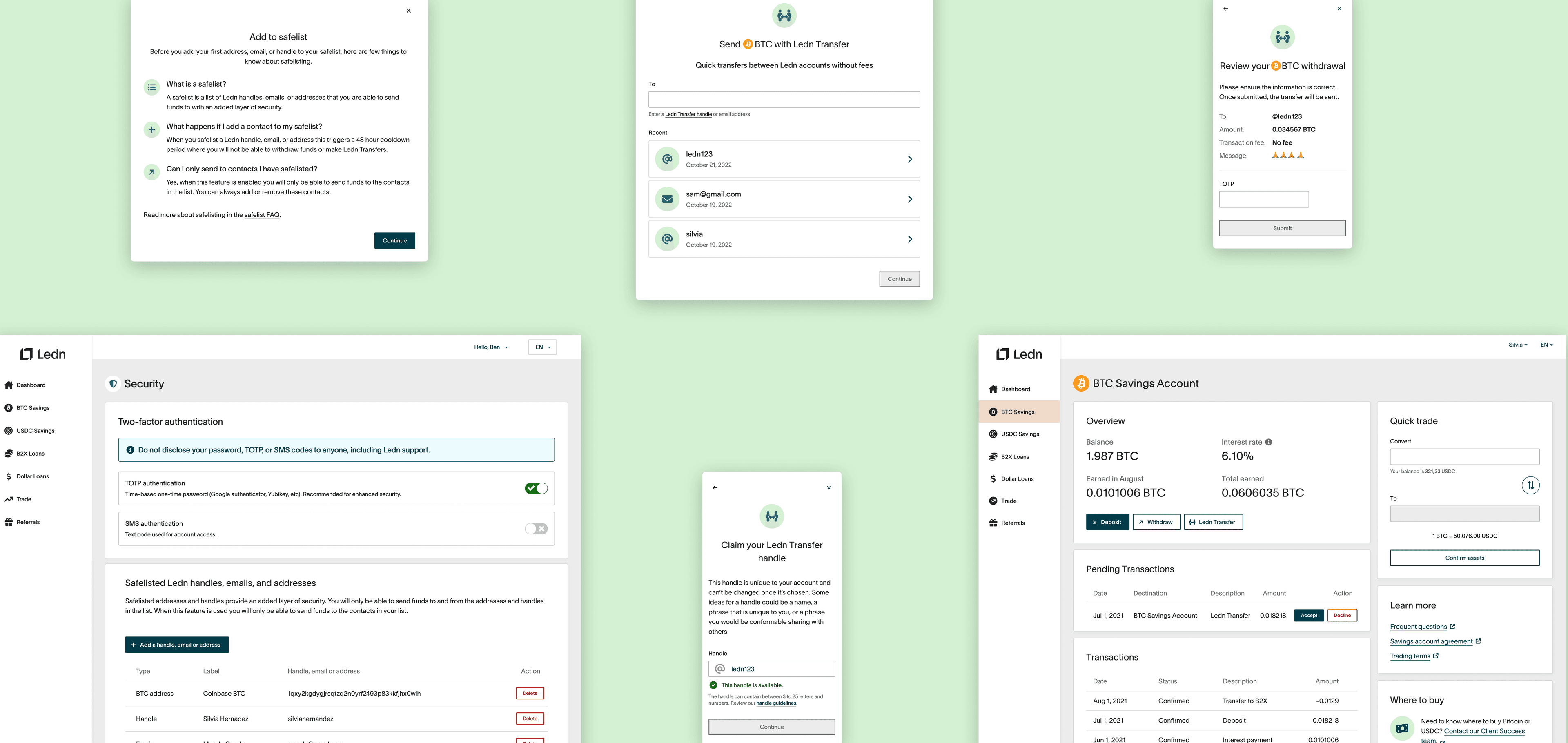
A peer-to-peer payments service that allows Ledn clients to send funds to each other via a Ledn Handle or by using an email address.
Role
Lead Product Designer
Timeline
January 2023 to March 2023
I led design on Ledn Transfer, a peer-to-peer payment service that lets Ledn clients send funds using just a Ledn Handle or an email address.
The goal was to change how people used the platform. Two things had to happen at once: instant, fee-free global transactions, and more clients on the platform worldwide.
(1)
Project alignment and research
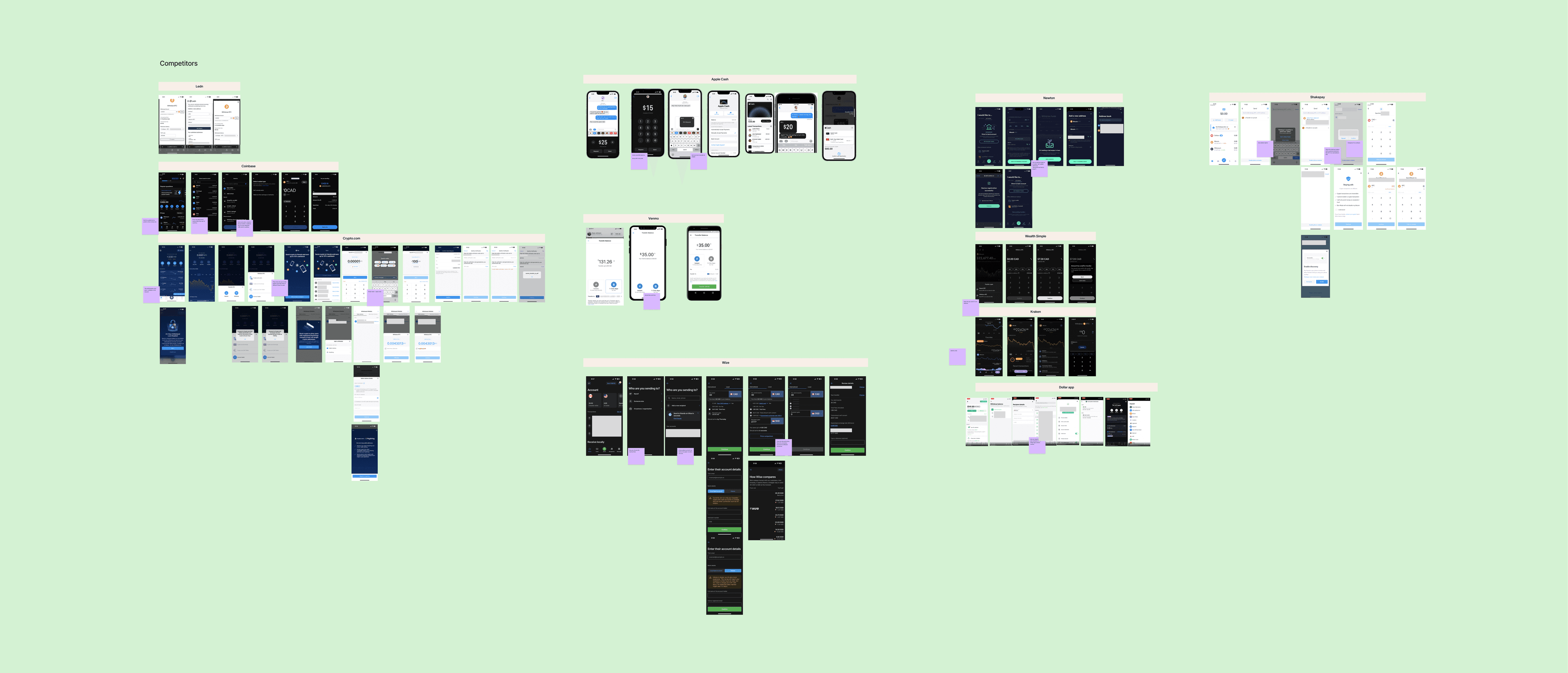
Competitive research: studying peer-to-peer payment services to find the features worth borrowing.
Industry benchmarking
- Reviewed the strongest peer-to-peer payment services in crypto.
- Pulled out the features and practices that set the bar.
Platform analysis
- Went through the existing Ledn platform in detail.
- Mapped what it already offered and where users kept hitting friction.
Competitive analysis
- Looked at competitors' strengths and weaknesses.
- Used what we found to shape a transfer feature that stood apart.
(2)
Ideation and brainstorming
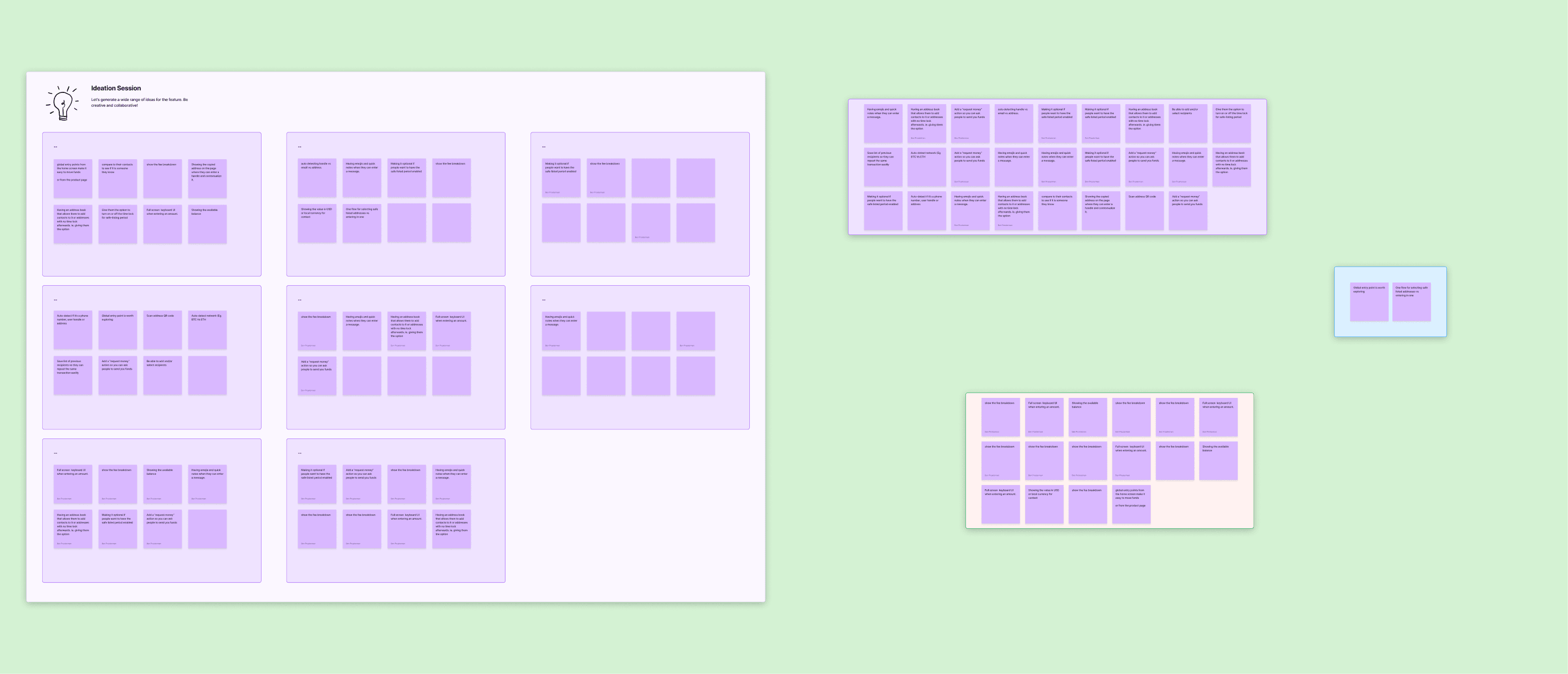
Ideation session: post-it notes capturing the team's ideas.
Core objectives
- Nailed down the two goals first: fee-free global transactions and a bigger user base.
- Kept the service reachable for current and prospective Ledn clients alike.
How the workshops ran
- Ran the workshops on FigJam with clear goals so people could work together in real time.
- Studied the best features from the leaders to shape the feature set.
- Kept the brainstorm wide open so everyone could contribute.
(3)
Prioritization and MVP definition
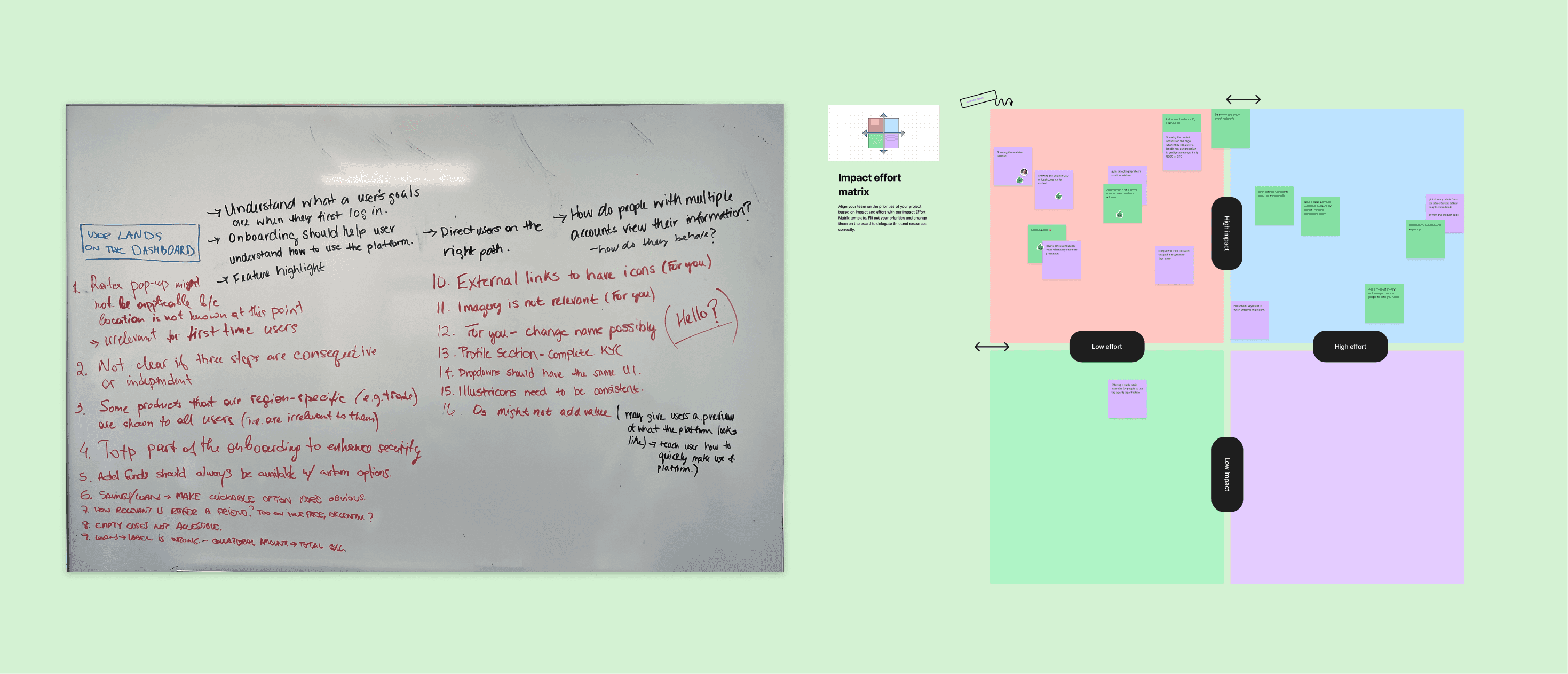
Prioritization workshop: stakeholders weigh user goals on the left, impact-effort matrix on the right.
We ran a prioritization workshop to trim the feature set for the MVP. With stakeholders, we assessed the ideas from ideation, ranked each one on an impact-effort matrix, and sorted them into Must Have, Should Have, and Nice to Have.
Must Have
- Fee transparency
- Interactive UI with full-screen keyboard
- Enhanced UX, emojis and notes
- Smart user verification (handle, email, phone)
- Global entry point
- Multi-currency transaction visibility
- Contact management
Should Have
- Incentivization / rewards
- Security options, time-lock toggle
- Address book integration
Nice to Have
- Incentivization programs
- Request money functionality
(4)
Prototype and design
Journey mapping
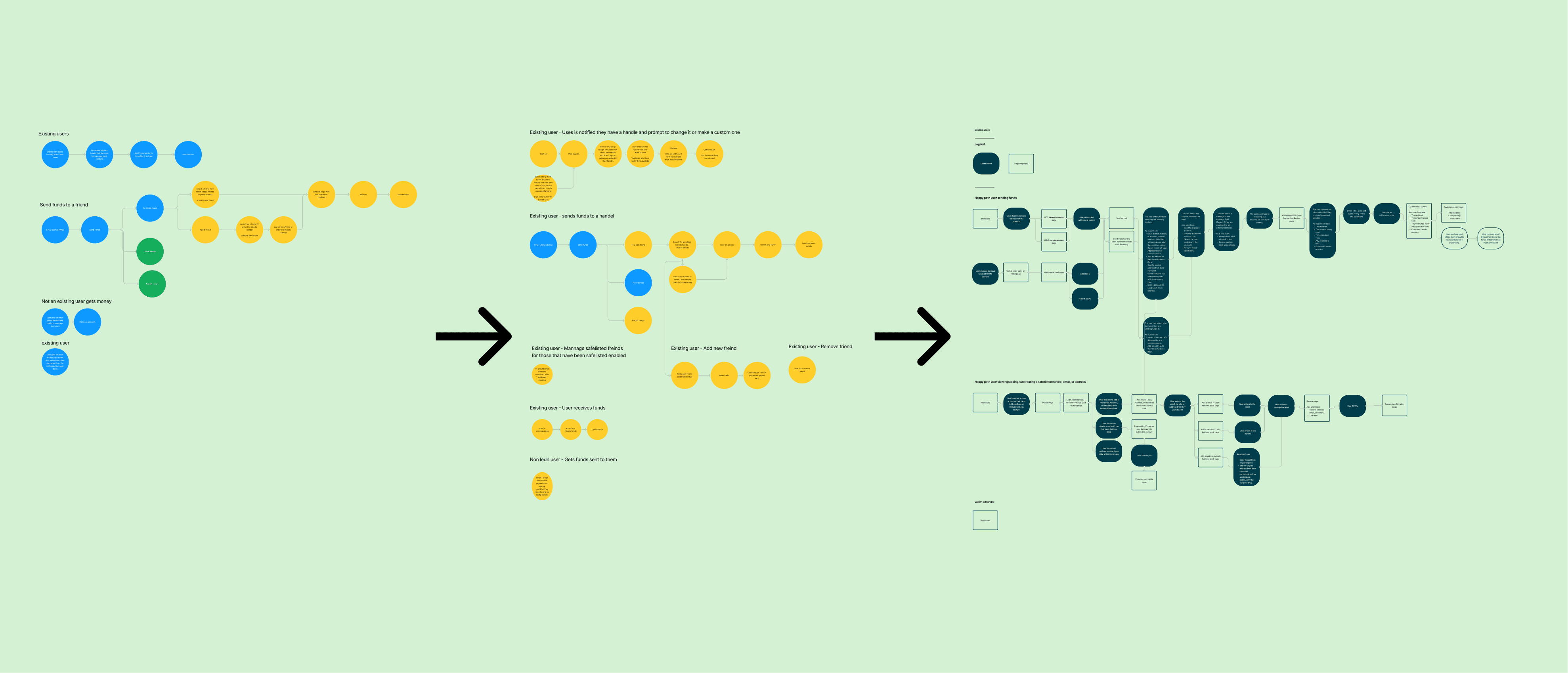
I mapped the whole user flow, weighing different user needs as I went. The team and I refined the map to match our shared picture of the feature. Then I walked leadership and legal through the journey to get everyone on the same page before we moved on.
Prototyping
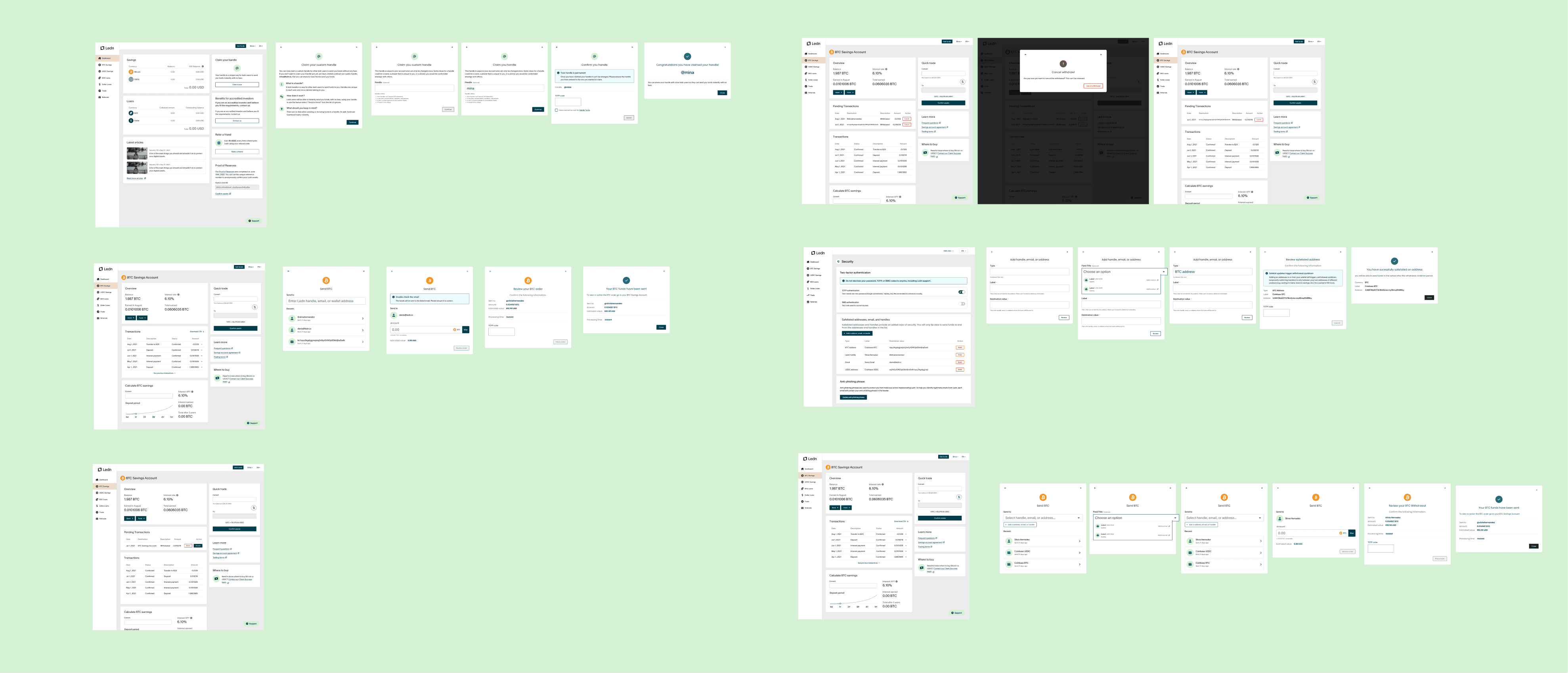
Version 1 of the prototype: six distinct flows turning concepts into something you could click through.
(5)
Testing and validation
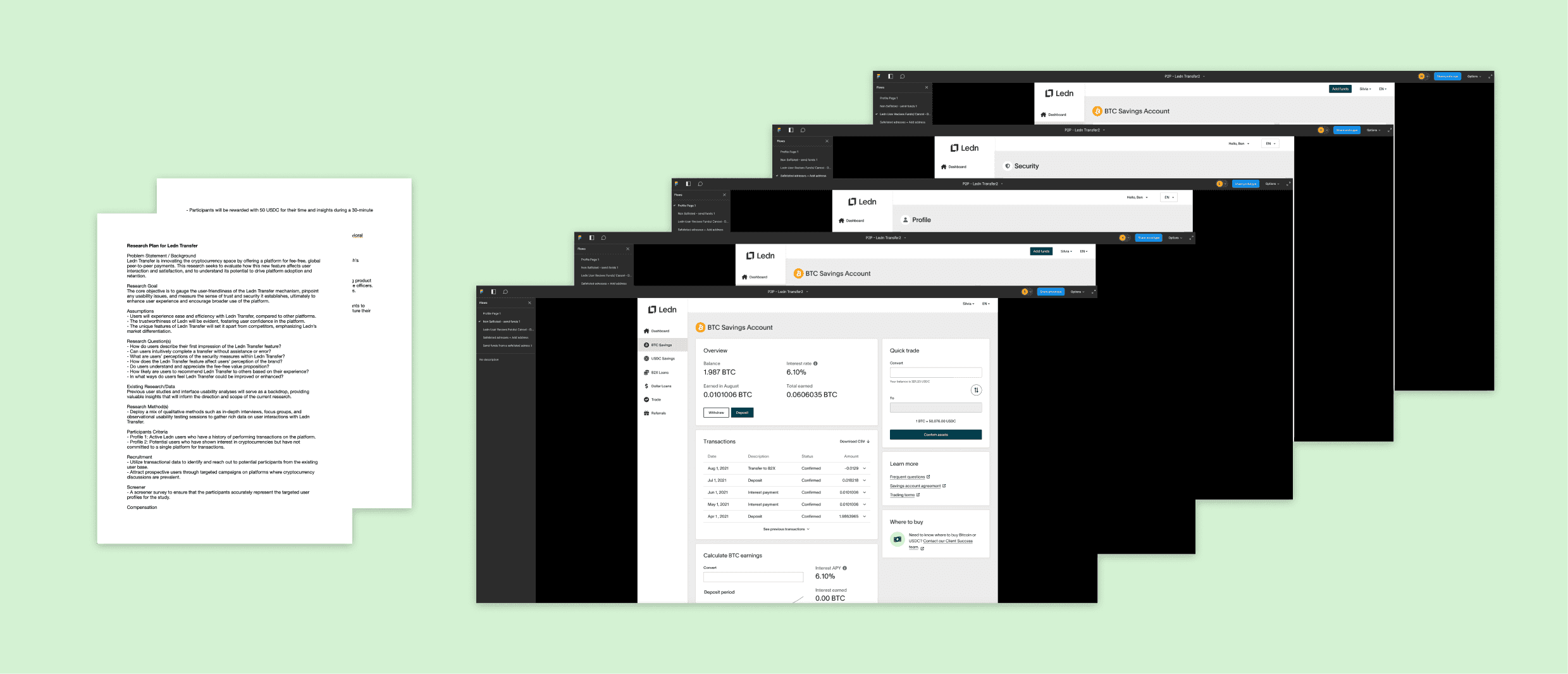
Research plan with five distinct user interface flows used for prototype testing.
- Built five user-flow prototypes, each for a different scenario.
- Worked with Customer Service to find clients matching our target profile.
- Recruited seven clients for hour-long testing sessions.
- Ran the sessions to learn what we could actually act on.
Main feedback themes
- Ease of Use: difficulty with crypto terminology; need for glossary or tooltips.
- Security Concerns: desire for more transaction security assurances and error handling.
- Design & Layout: readability issues in dark mode; suggestions for improved contrast.
- Functionality: requests for transaction notes and detailed histories.
Observed user behaviours
- Kept looking for guidance, wanted easy-to-reach help.
- Rechecked recipient details before confirming.
- Ran small “test” transactions before the real transfer.
- Went back to review transaction history after sending.
Improvement opportunities
In-app educational resources / tutorials
Two-factor authentication
Email/text transaction confirmations
Dark mode contrast adjustments
Font size options
Payment annotations
Frequent contacts list
Real-time feedback mechanisms
(6)
Build and deliver
Final experience
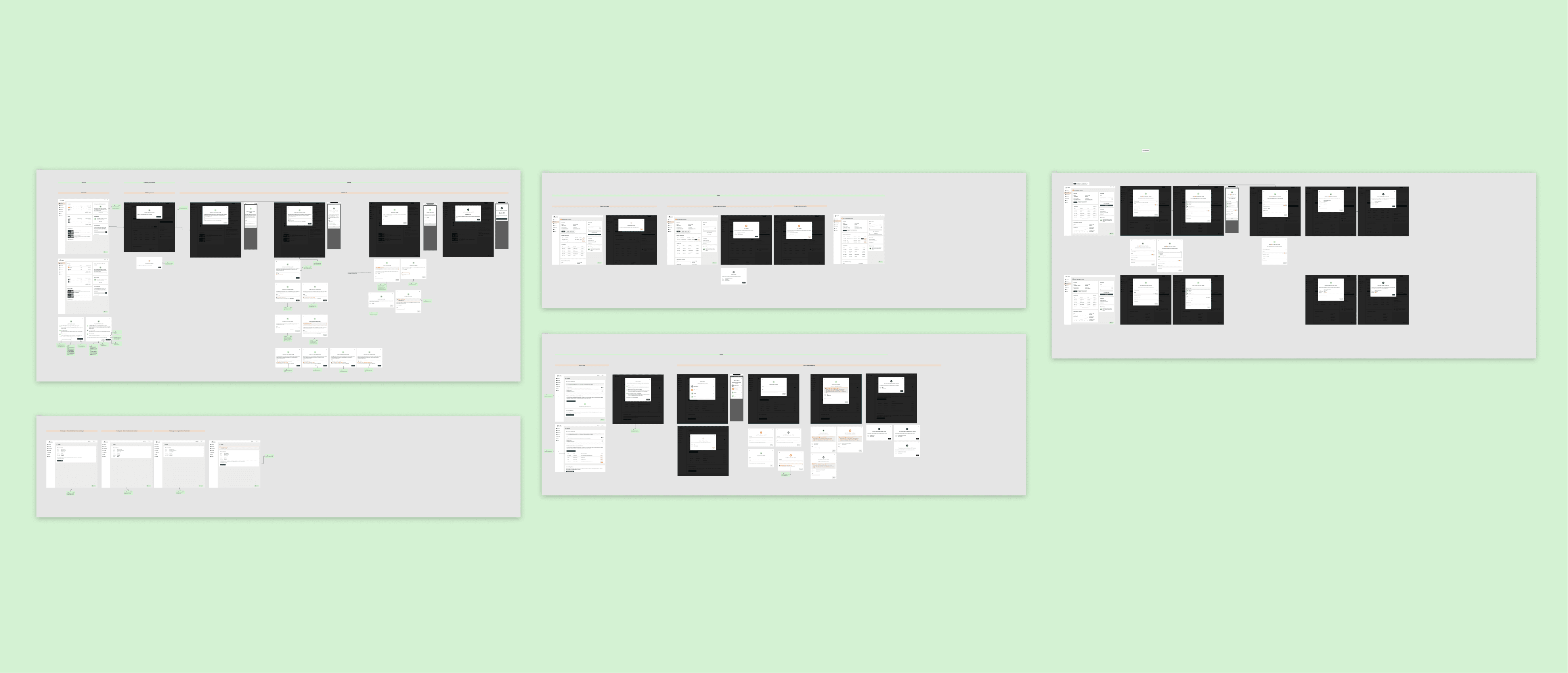
The Figma file was the development team's single source of truth: finalized experience designs, documentation and guidelines, and the final copy, so the handoff from design to build didn't skip a beat.
Developer documentation
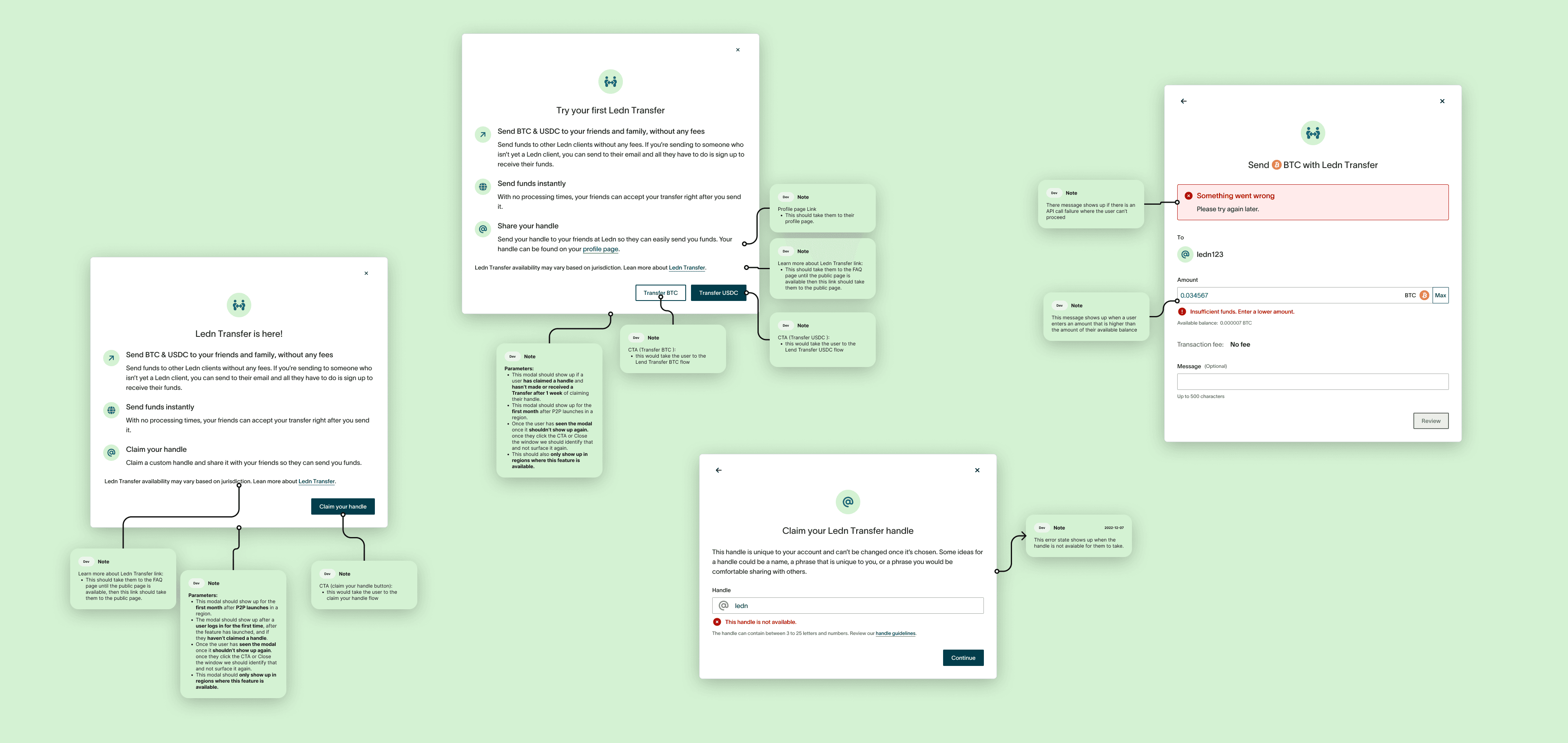
Documentation with annotated examples spelling out when each screen should appear and when error states should trigger, so the front-end team could build every screen accurately and true to the designs.
Post-MVP follow-ups
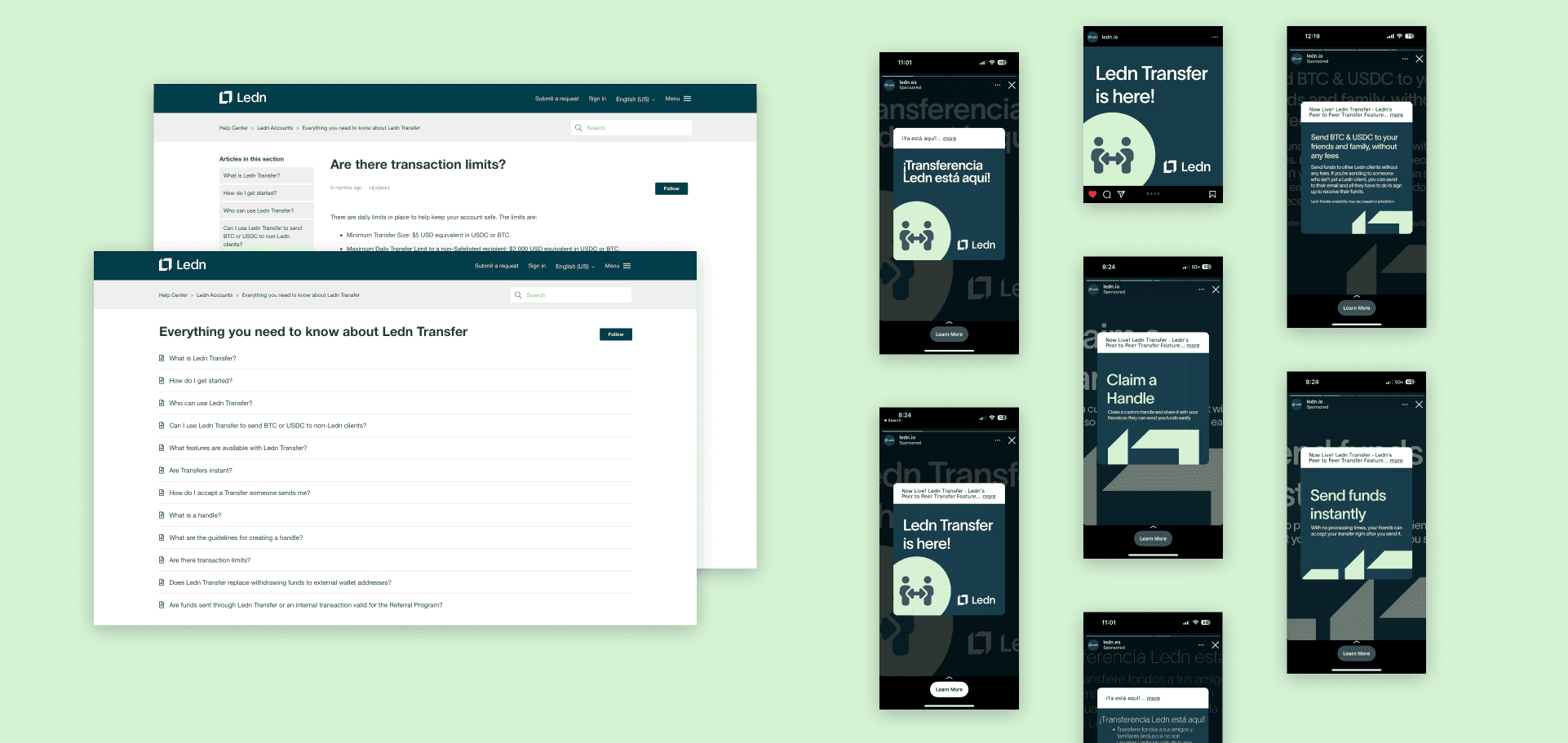
FAQ page
- Worked with the support team and project manager.
- Wrote a full FAQ page for Ledn Transfer.
- Kept the answers clear and easy to find.
Marketing push
- Gave the marketing team the design pieces they needed.
- Helped with the global launch campaign.
- Made sure the message landed with the right audience.
Takeaways
- Tight documentation carried the build. Notes on each part of the interface kept a large developer team on the same page.
- Get stakeholders in early. Bringing in legal before the workshops, not after, would have saved us time later by settling things like disclaimers up front.
- Loop in the design-system engineer early too. It gave them time to build the new components the front-end team needed.
Next Project
CIBC
Carbon Footprint Tracker